Alabama's 1% Rule: How Contributory Negligence Can Wipe Out a Motorcycle Claim
If you ride the Alabama Gulf Coast, there is one rule you need to understand before you ever have to file a claim, and most riders have never heard of it. It is called pure contributory negligence, and it is one of the harshest fault rules in the country. Alabama is one of the very few states that still uses it, and it can turn a strong motorcycle injury case into nothing at all.
What Pure Contributory Negligence Actually Means
Most people assume that fault gets divided up. They picture a crash where the other driver is 90 percent at fault and the rider is 10 percent at fault, and they expect the rider to recover 90 percent of the damages. That is how many states work. It is not how Alabama works. Under Alabama's pure contributory negligence rule, fault is not a sliding scale that reduces your recovery. It is a switch. If the defense can show you were even slightly careless and that your carelessness helped cause the crash, that can bar your claim entirely. One percent of fault carries the same consequence as ninety-nine percent. This is why a claim that would be worth pursuing almost anywhere else can be defeated in Alabama over a small detail. It also explains why the insurance adjuster's first goal is rarely to figure out what happened. It is to find something, anything, to hang a share of blame on the rider.
Why This Rule Hits Motorcyclists Especially Hard
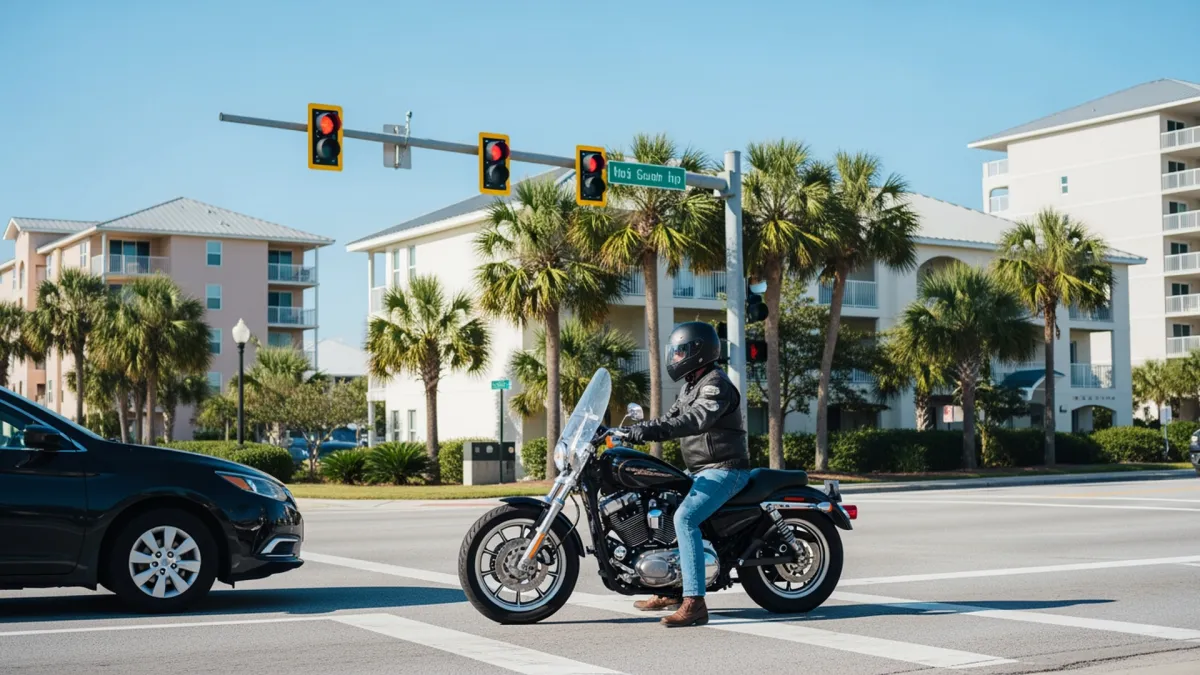
Riders already face a bias that cars do not. When a motorcycle and a car collide on Highway 59 or the Baldwin Beach Express, plenty of people assume the rider was speeding, weaving, or riding recklessly, even when the driver of the car turned left across the rider's path. That built-in assumption is a gift to an insurance company operating under a 1 percent rule. The defense commonly argues that you were speeding, even a few miles per hour over the limit. It argues you could have avoided the crash, that a more attentive rider would have braked sooner or swerved, no matter how little time you actually had. It argues your lane position on Gulf Shores Parkway or Fort Morgan Road was wrong, or that you were not visible enough on coastal AL-182 at dusk. None of these arguments have to be true to be dangerous. They only have to create enough doubt to assign the rider that fatal 1 percent.
Fault Is Decided by Evidence, Not by the Adjuster
The good news is that fault is not whatever the insurance company says it is. It is a question decided on the evidence, and evidence can be gathered, preserved, and used to protect a rider. That is exactly why the moments and days after a Gulf Coast crash matter so much. Skid marks on I-10 or the Foley Beach Express fade quickly. A vehicle that shows the point of impact gets repaired or scrapped. Surveillance video from a business near the crash is often recorded over within weeks. Witnesses who saw the car turn in front of you move on, change numbers, and forget details. Every one of those pieces can be the difference between a claim that survives and a claim that dies over a manufactured 1 percent. Because a single percentage point can end a claim, an Alabama motorcycle case is often won or lost in how fault gets built and defended. This is not a place to wait, guess, or assume the truth will speak for itself. The insurance company is already working, and it is working against you.
How Riders Protect Themselves Under This Rule
You cannot change Alabama's fault rule, but you can avoid handing the other side the blame it is looking for. A few habits make a real difference the moment a crash happens and in the days that follow.
- ✓ Be careful what you say. A casual apology or an offhand statement at the scene can be replayed as an admission of fault.
- ✓ Do not give a recorded statement to the other insurer. Those questions are designed to draw out a share of blame before you understand your position.
- ✓ Document everything. Photos, witness names, and the location of the crash help lock down what actually happened before the story can be reshaped.
- ✓ Get the evidence preserved early. The sooner someone secures the footage, the vehicles, and the scene details, the harder it is for the defense to invent shared fault.
Noel Leonard and the Foley / South AL motorcycle injury attorneys at Noel B. Leonard Attorney represent riders hurt by negligent drivers. If you have questions after a crash, their team is here to help.